The models and frameworks introduced in The Relevance Code, each designed to decode how customers think, drift, and decide.
What You'll Discover
Key Insights
Framework 01
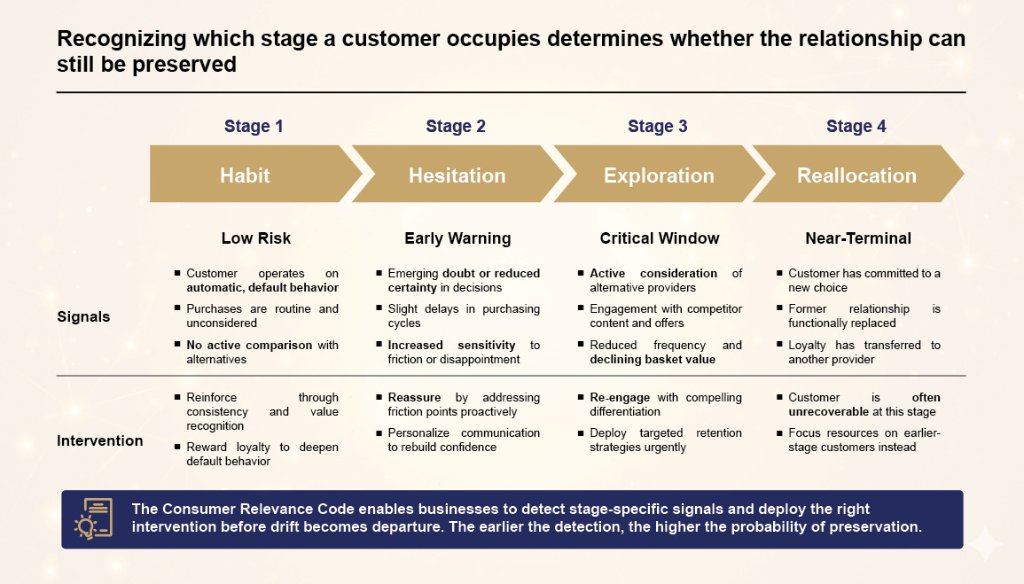
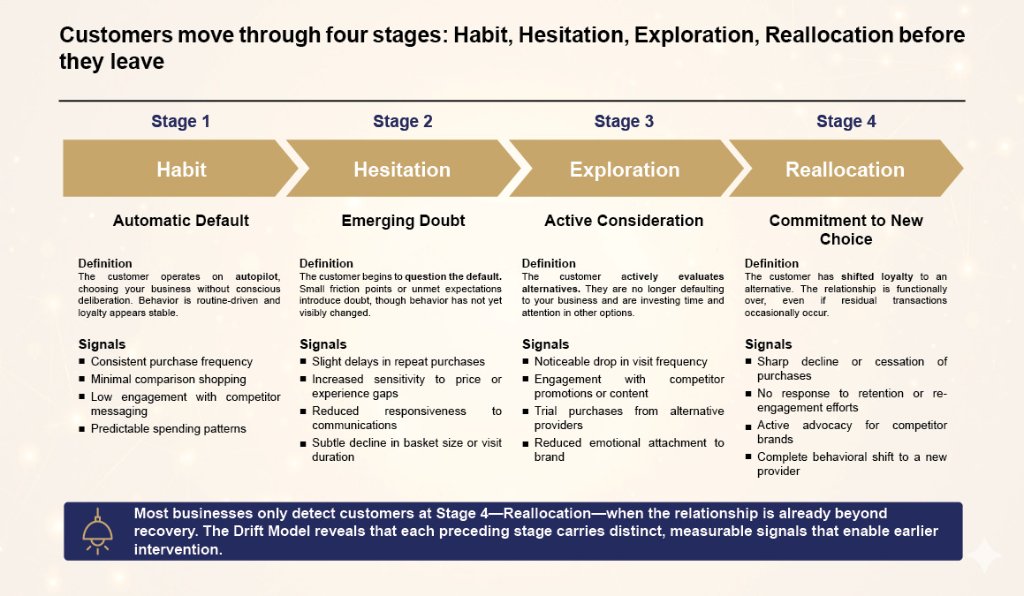
The Consumer Relevance Code — Drift Stages
Customers move through four stages before they leave: Habit, Hesitation, Exploration, and Reallocation. Each stage carries distinct, measurable signals that enable earlier intervention.
Framework 02
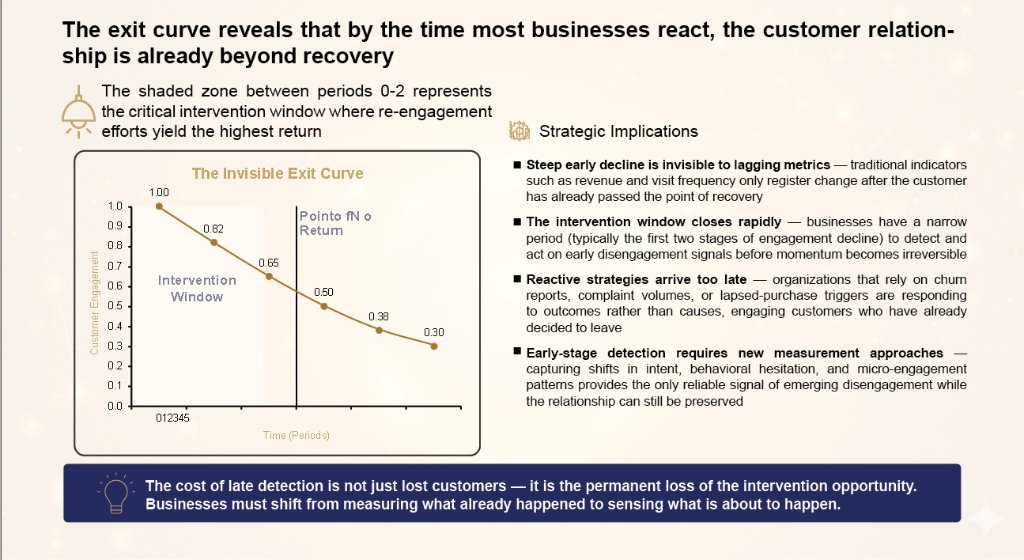
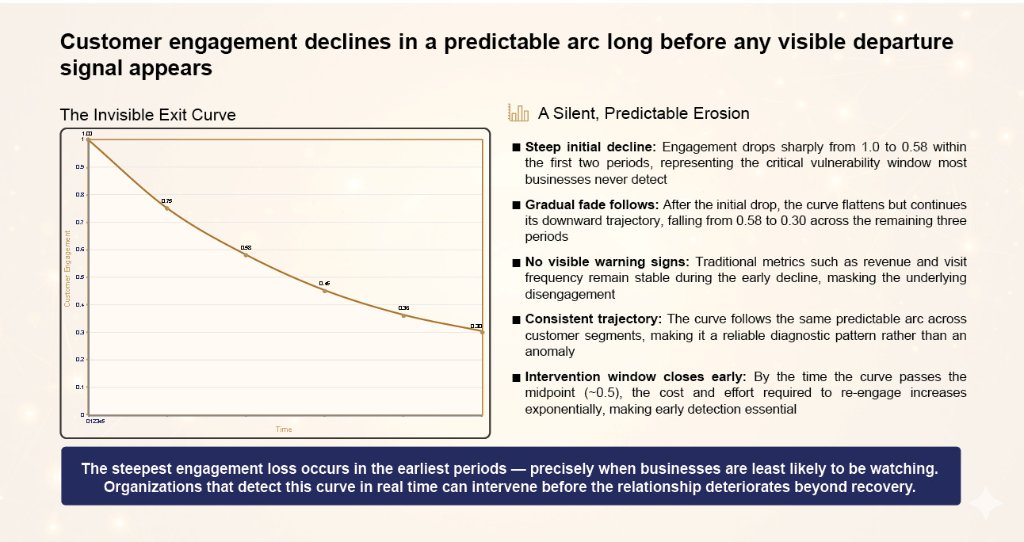
The Invisible Exit Curve
Customer engagement declines in a predictable arc long before any visible departure signal appears. The steepest engagement loss occurs in the earliest periods — precisely when businesses are least likely to be watching.
Framework 03
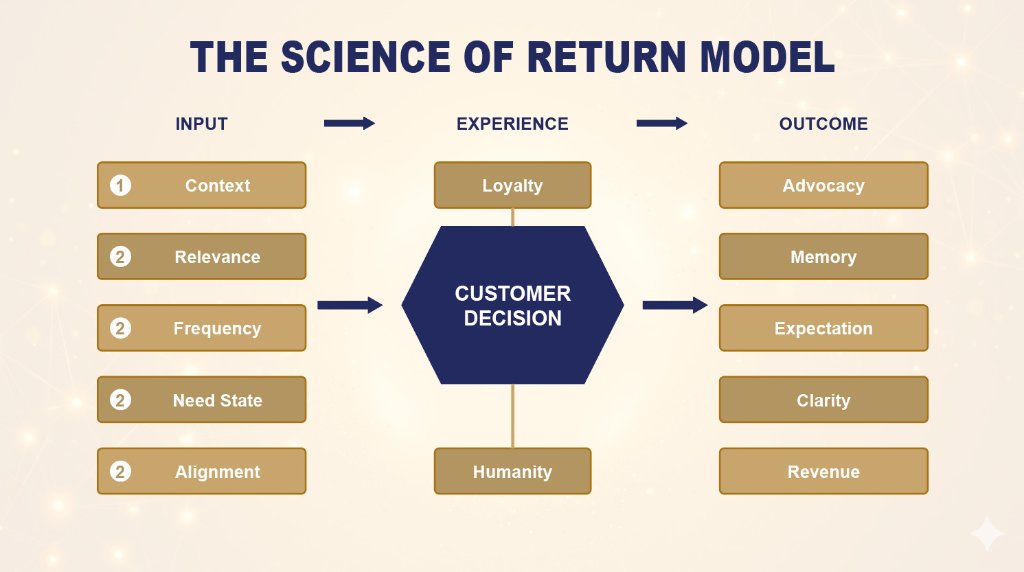
The Science of Return Model
A comprehensive Input → Experience → Outcome model mapping how Context, Relevance, Frequency, Need State, and Alignment flow through the Customer Decision to produce Advocacy, Memory, Expectation, Clarity, and Revenue.
Framework 04
The Drift Model — Four Stages Detailed
From Automatic Default to Commitment to New Choice — each stage carries distinct signals, from consistent purchase frequency through to complete behavioral shift to a new provider.
Framework 05
Strategic Implications of the Exit Curve
The intervention window closes rapidly. Businesses have a narrow period to detect and act on early disengagement signals before momentum becomes irreversible.
Framework 06
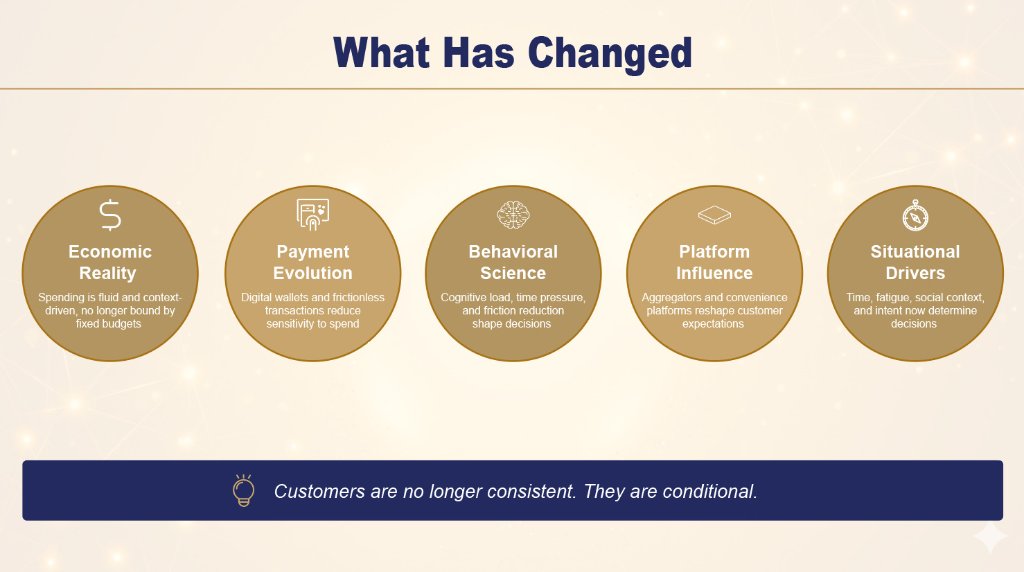
Customer Behavior Stages
Five forces reshaping customer behavior: Economic Reality, Payment Evolution, Behavioral Science, Platform Influence, and Situational Drivers. Customers are no longer consistent, they are conditional.
Framework 07
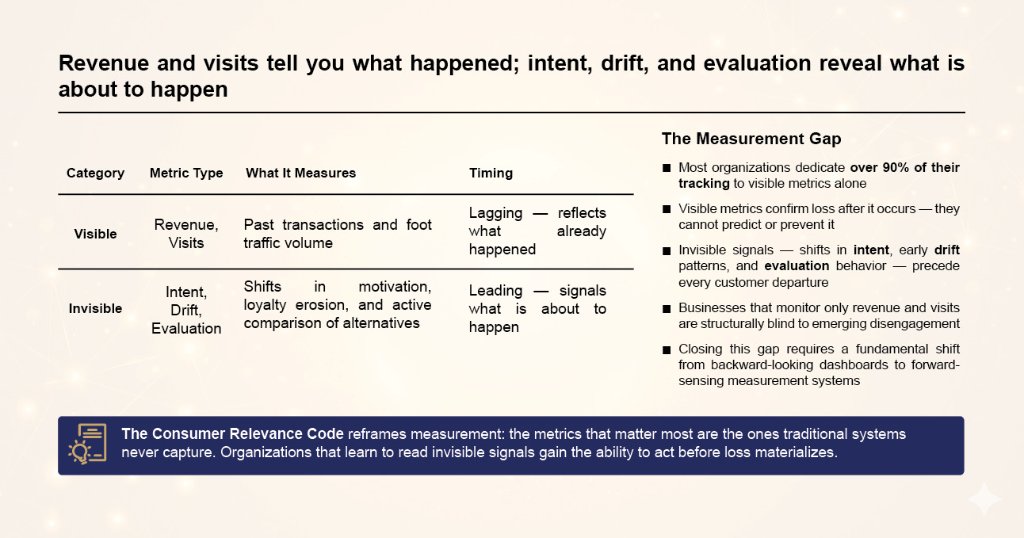
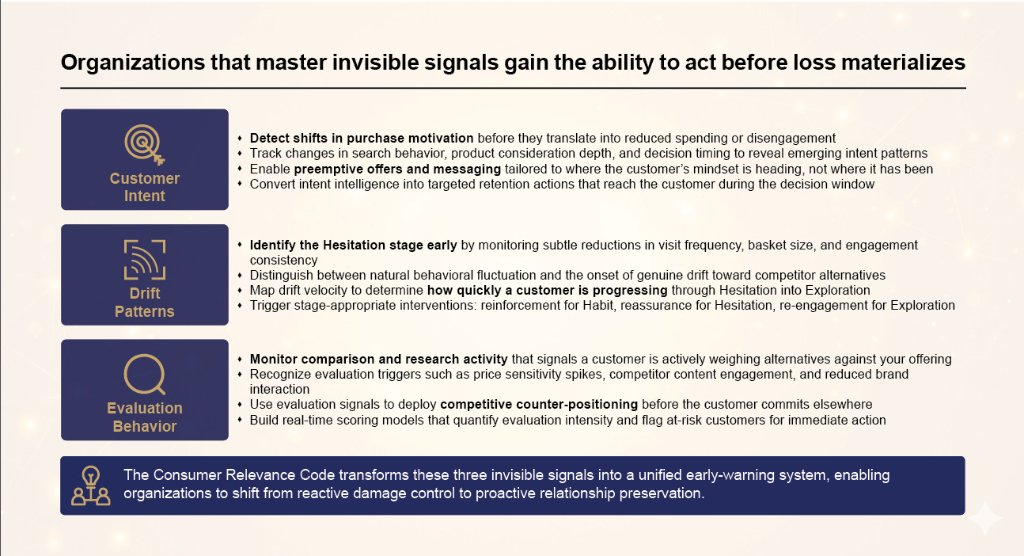
Mastering Invisible Signals
Organizations that master Customer Intent, Drift Patterns, and Evaluation Behavior gain the ability to act before loss materializes — transforming reactive damage control into proactive relationship preservation.
Framework 08
The Measurement Gap
Revenue and visits tell you what happened; intent, drift, and evaluation reveal what is about to happen. The metrics that matter most are the ones traditional systems never capture.